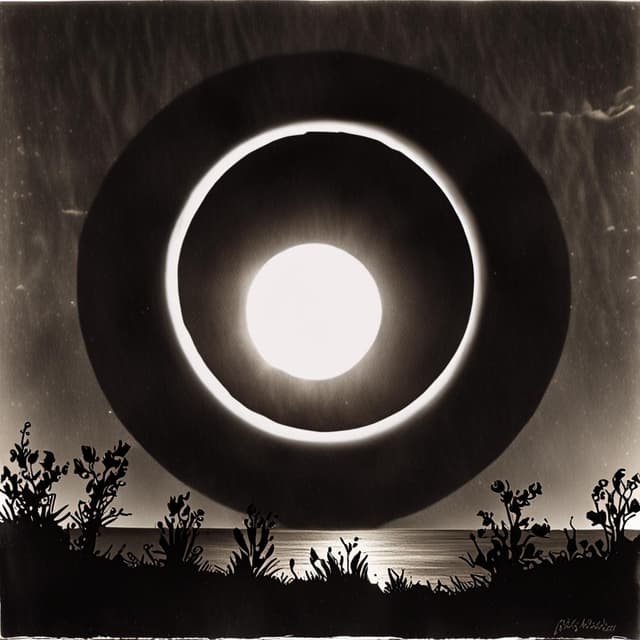
| Date | August 18, 1868 |
| Impact | Represented an incremental advance in solar astronomy, but did not have the same paradigm-shifting impact as it did in our reality |
| Location | Observed internationally |
| Significance | Provided new insights into the composition and structure of the sun's atmosphere, including the discovery of the solar chromosphere and prominences, but did not lead to the definitive discovery of helium as a new element within the sun |
The solar eclipse of August 18, 1868 was a significant astronomical event that provided new insights into the composition and structure of the sun's atmosphere. While observations of the eclipse were made by scientists from several countries, the data collected and conclusions drawn were more limited in scope compared to the impact of the same eclipse in our historical timeline.
By the 1860s, astronomers had developed a keen interest in studying the sun and its atmosphere, known as the corona. Observations of total solar eclipses were seen as crucial opportunities to directly observe the sun's outer layers, which are normally obscured by the sun's bright disk.
Prior to 1868, solar eclipse observations had revealed some basic features of the corona, such as its overall shape and luminosity. However, the chemical composition of the corona remained a mystery, as did the nature of the prominences - the bright red "flames" seen extending from the sun's edge during totality.
The solar eclipse of August 18, 1868 was widely observed by scientific expeditions from various nations, including France, Britain, Spain, and India. Observers were stationed at different locations along the eclipse's path of totality, which stretched across Asia and the Indian Ocean.
The eclipse confirmed the existence of the solar chromosphere - a reddish layer surrounding the sun's visible surface. It also clearly showed the prominences, verifying that they were integral features of the sun's atmosphere rather than optical illusions.
However, the observations did not conclusively determine the chemical makeup of the chromosphere and prominences. While the spectra of the prominences suggested the presence of hydrogen, the evidence for other elements was inconclusive.
Unlike in our timeline, the 1868 eclipse observations did not lead to the discovery of helium as a new element found in the sun's atmosphere. The spectral evidence, while hinting at the presence of an unknown element, was not definitive enough for scientists to make this groundbreaking claim.
Factors contributing to this included the lack of comprehensive, coordinated observations between the various expeditions, as well as limitations in the spectroscopic equipment and analysis techniques of the time. The discovery of helium would have to wait several more years.
While the 1868 solar eclipse did not have the same paradigm-shifting impact as in our reality, it still represented an important step forward in solar astronomy. The observations confirmed the existence of the chromosphere and prominences, providing a better understanding of the sun's atmospheric structure.
Subsequent solar eclipse expeditions, enabled by improved instruments and coordination, would continue to refine knowledge of the sun's composition and behavior. But the 1868 eclipse remained a significant event in the history of solar science, helping to lay the groundwork for future breakthroughs.
Even today, observations of total solar eclipses continue to yield new insights about our star, making them valuable astronomical events worthy of study and celebration around the world.
